
![Tony Conrad Untitled (Untitled (...mine if you ...yours [III]), 2009 Acrylic, underwear, bulletin board 36 x 46 1/2 inches (91 x 118 cm)](https://gngallery.nyc3.cdn.digitaloceanspaces.com/media/migrated-data/_1800xAUTO_crop_center-center_none/08d06fe71fbc191a00317b405c93f6f3.jpeg)
TONY CONRAD
Culturgest, Lisbon


Tony Conrad, Yellow Movie (video), 1973
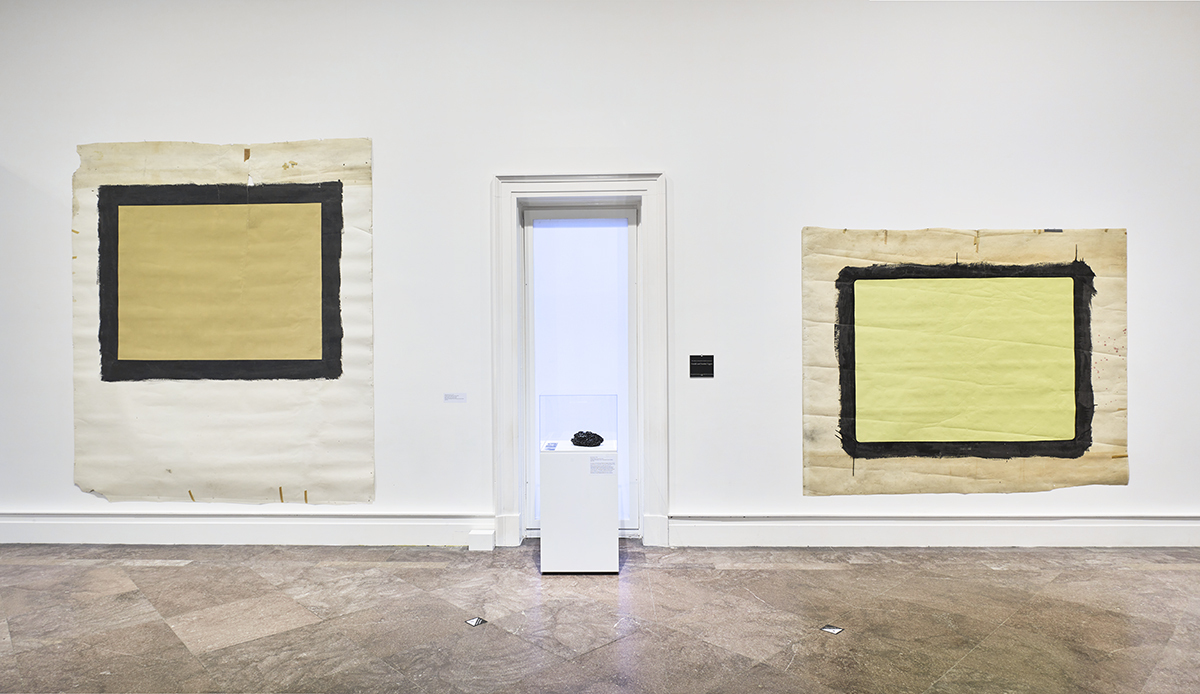
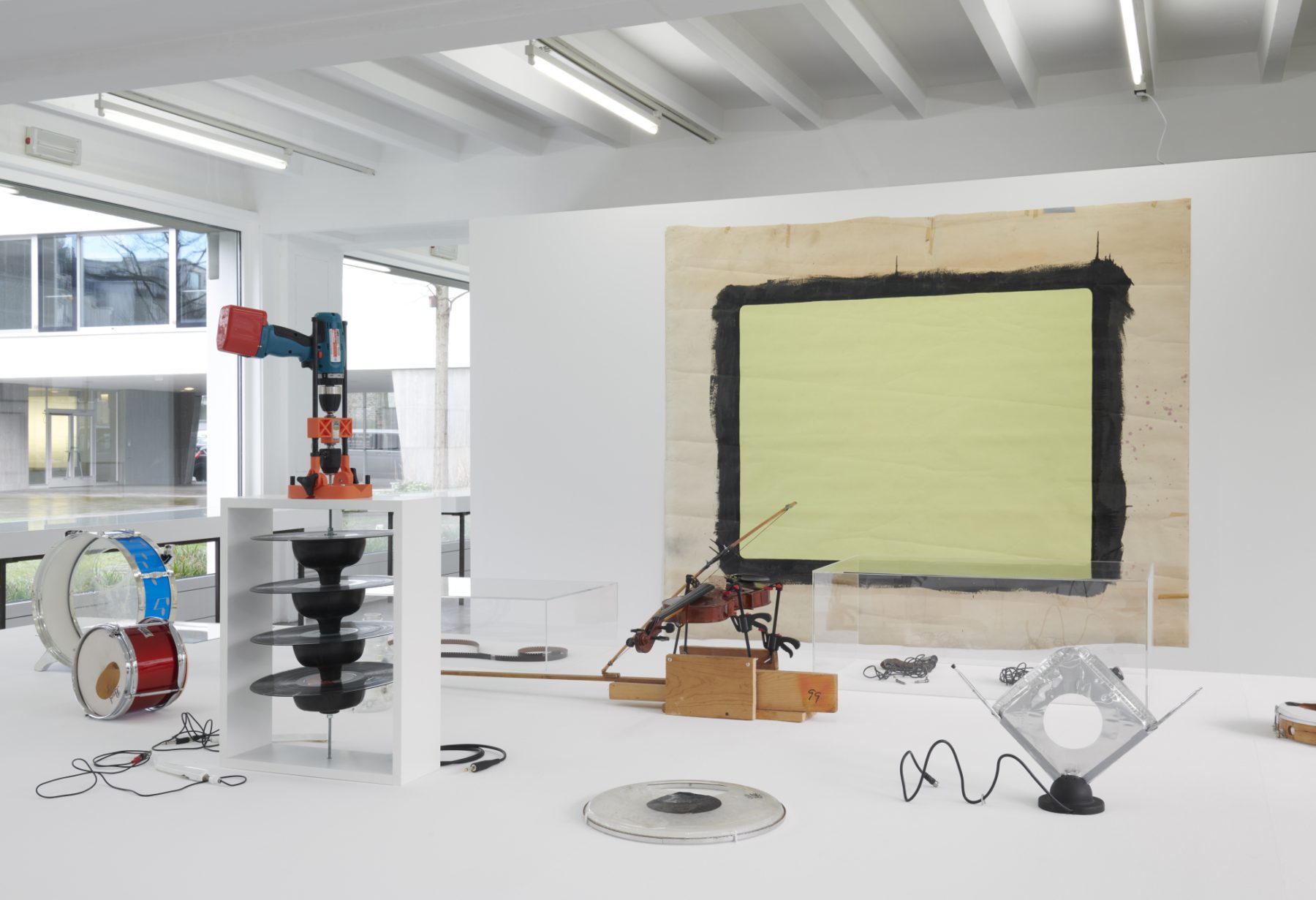
Tony Conrad (1940–2016) was a galvanic figure across multiple strains of the avant-garde. His protean career spanned five decades and resisted authority in all its forms; as Conrad put it, “the job of an artist is to discover laws to violate that haven’t been made yet.” Best known as a trailblazer in the fields of both drone music and structural film, Conrad worked in sound, video, performance, painting, installation, public access television, and “paracinema”—experiential works that defied the logic of what film might be. His iconic The Flicker (1966) uses stroboscopic effects to induce what he called “a hallucinatory trip . . . of pure sensory disruption,” while his Yellow Movies of the 1970s are absurdist send-ups of filmic duration and monochrome painting alike. A co-founder of the Theatre of Eternal Music, Conrad proved foundational to art movements ranging from Fluxus to Minimalism and became a revered teacher at SUNY Buffalo, collaborating at various stages with La Monte Young, Jack Smith, Walter De Maria, Lou Reed, Ericka Beckman, and Mike Kelley. For the art historian Branden Joseph, Conrad was thus “integral to the ‘secret history’ of the ’60s” and their wake—a legacy of restless experimentation in previously siloed genres that he found new ways to bridge.
* * *
Tony Conrad lived and worked in Buffalo, New York. Recent solo exhibitions include Culturgest, Lisbon (2022); MAMCO, Geneva (2021); Kölnischer Kunstverein, Cologne (2020); Institute of Contemporary Art, Philadelphia (2019); MIT List Visual Arts Center and the Carpenter Center for the Visual Arts at Harvard University, Cambridge (2018); Albright-Knox Art Gallery, Buffalo and University of Buffalo Art Gallery (2018); Greene Naftali, New York (2016, 2013); Kunsthalle Wien, Vienna (2014); and Museo d'Arte Contemporanea, Villa Croce, Genoa (2013).
His work is in the collections of the Walker Art Center, Minneapolis; Museum of Contemporary Art Chicago; Los Angeles Museum of Contemporary Art; Tate Modern, London; Museum für Moderne Kunst, Frankfurt; and the Whitney Museum of American Art, New York, among others.
TONY CONRAD
Tony Conrad

Overwrite
Cory Arcangel, Julie Becker, Tony Conrad, Guyton\Walker, Jacqueline Humphries

Tony Conrad
WALKING POINT


Infected Foot

1966 - 2016
Lutz Bacher, Bernadette Corporation, Tony Conrad, Harun Farocki, Dan Graham, John Knight


WORKS ON PAPER


WORKS ON PAPER AND RICCI ALBENDA


MOTORE IMMOBILE

Tony Conrad
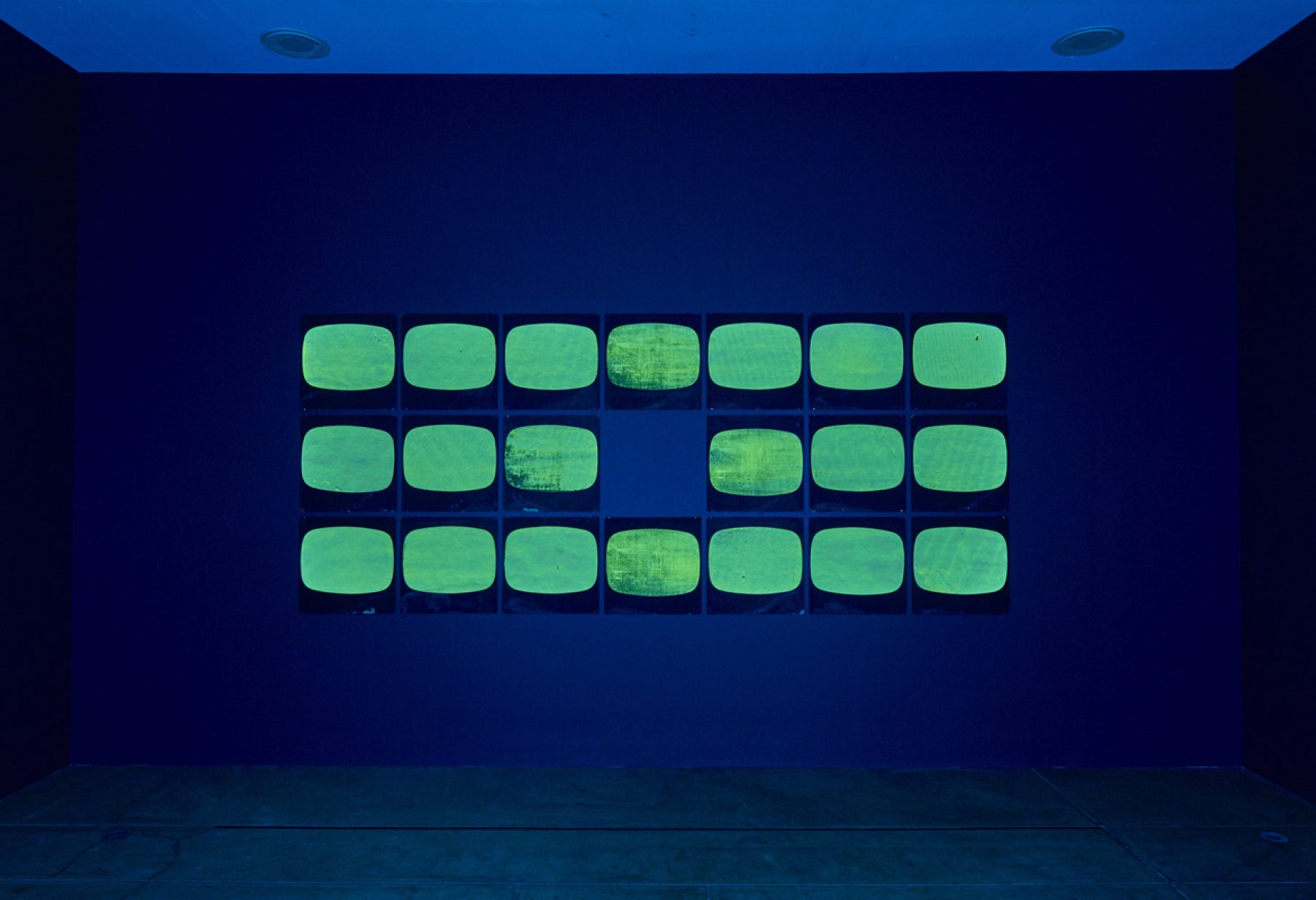
Yellow Movie: A 40 Monitor Show
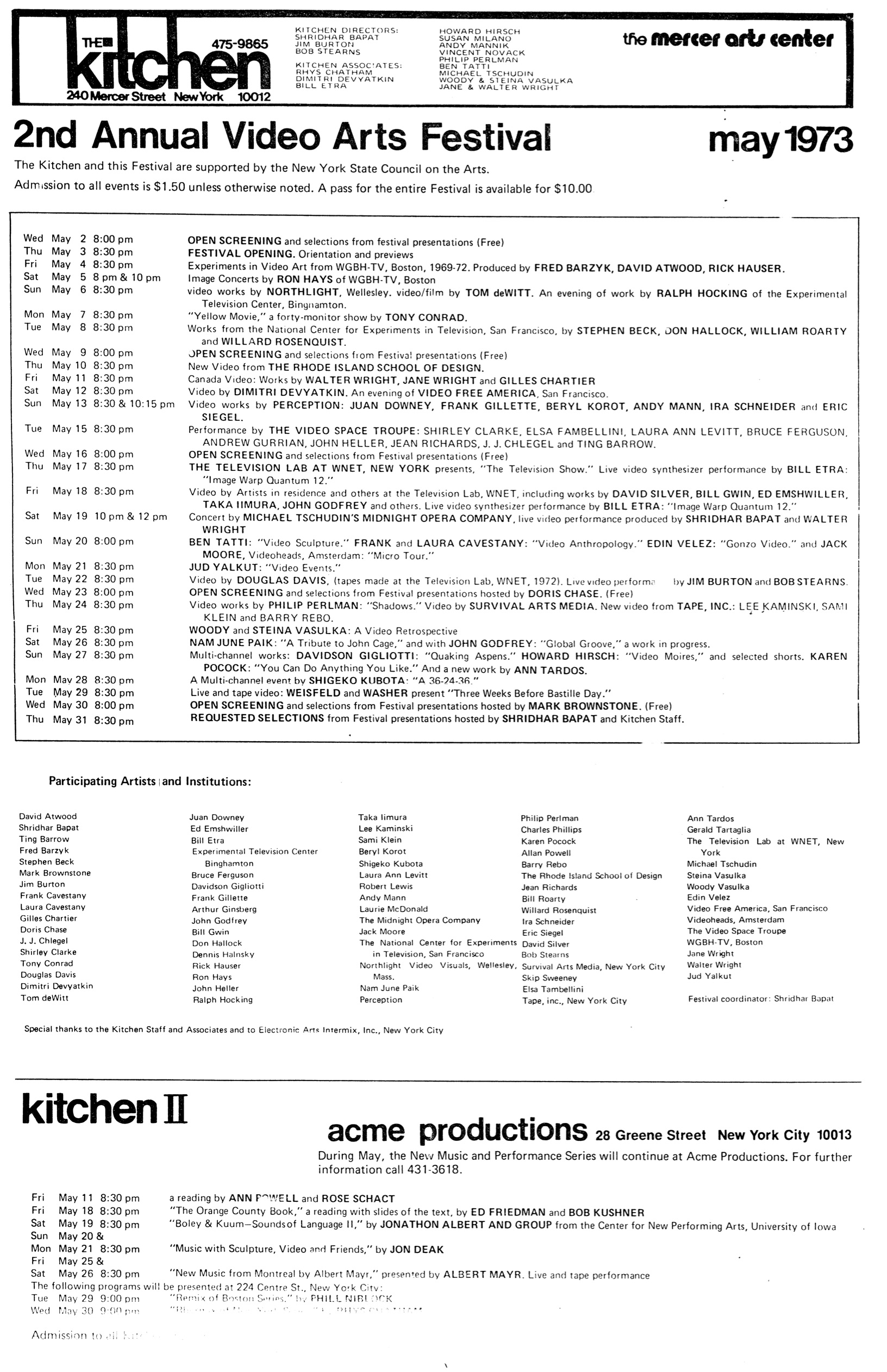
Tony Conrad: Writings

Introducing Tony Conrad


Doing The City/ Urban Community Interventions

Beyond the Dream Syndicate, Tony Conrad and the Arts after Cage

Yellow Movies
